 Tutorials
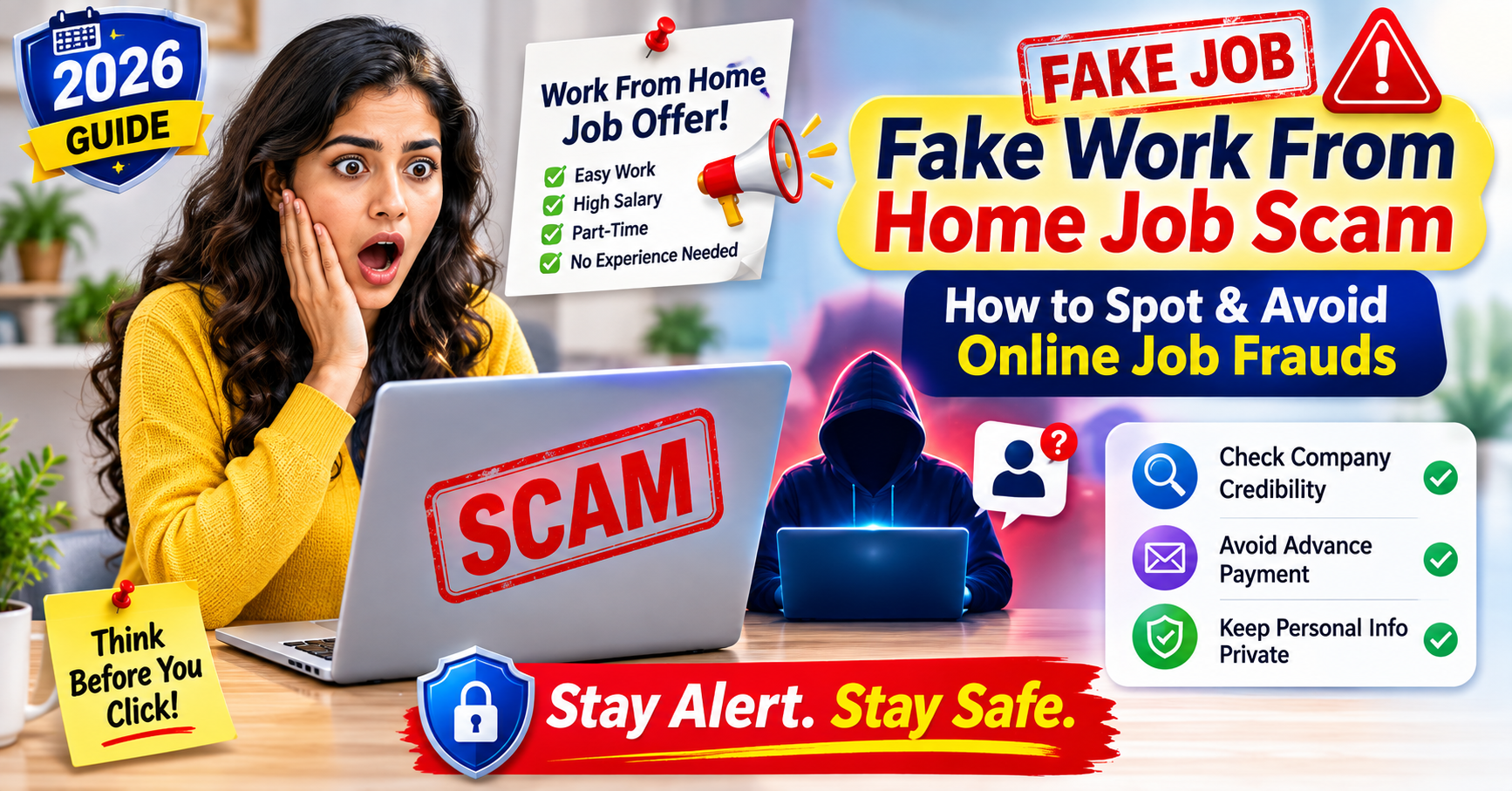
Fake Work From Home Job Scam: How to Spot & Avoid Online Job Frauds (2026 Guide)
Fake Work-From-Home Job Scams: How to Spot & Avoid Online Job Frauds
Working from home is a genuine opportunity for millions — but it’s also become a favourite hunting ground for scammers. Fake job offers have exploded, and they’re more convincing than ever. The hardest part? Most people who get caught were sure they never would. This guide shows you exactly how these scams work, the red flags that give them away, and what to do if you’ve already been hit.
This is bigger than most people realise
Job-scam losses have soared into the hundreds of millions and keep climbing — one report noted roughly a tenfold spike in job scams over just a few months of 2026. Scammers now use AI to build fake company websites, job posts, and even fake “employee” profiles that look completely real. And they target everyone: students, working professionals, and parents alike. The uncomfortable truth from the data: more than half of victims were confident they could never fall for it. Anyone can be a target — which is why knowing the patterns matters.
The one rule that stops most scams: A real employer never asks you to pay money to get a job or to unlock your earnings. If money has to flow from you, walk away.
The most common scams in 2026
1. Task scams (the big one). You’re offered simple tasks — liking videos, “optimising” products, rating apps — for surprisingly good pay. You may even get paid a little at first. Then you’re told to deposit your own money (often crypto) to “unlock” higher earnings or withdraw what you’ve made. Once you pay, it’s gone.
2. Fake company impersonation. A message that looks like it’s from a big brand asks for your details, then your bank information “to set up salary.” With that access, they take instead of pay.
3. Upfront-fee scams. You’re asked to pay for “training,” “software,” a “starter kit,” or “registration” before you begin. Real jobs don’t charge you to start.
4. Overpayment tricks. You’re “accidentally” sent extra money (or a cheque) and asked to return part of it. The original payment later bounces — and you’re out the difference.
5. AI-powered fakes. Increasingly, entire fake companies, job posts, and even video “interviews” are AI-generated. Polished doesn’t mean real.
The red flags — spot these instantly
⚠️ They ask you to pay money — fees, deposits, training, or to unlock earnings
⚠️ Pay that’s too good to be true for simple work
⚠️ Vague job details — “easy work, great pay,” no real duties
⚠️ Contact only via WhatsApp, Telegram, or text — chat-only interviews
⚠️ Urgency and pressure to accept or pay quickly
⚠️ Requests for bank details, ID, or OTPs early on
⚠️ No verifiable website, free email domains, or a misspelled company name
⚠️ They never ask for references — a real employer checks who you are
A simple rule: if you count two or more of these flags, stop and walk away. No opportunity is worth the risk.
How to check if a job is real
• Verify the company independently. Visit its official website (check the URL is right), look at its LinkedIn for real employee activity, and search “company name + scam” before engaging.
• Contact them through official channels. Use the phone or email on the real website — not the number in a random DM.
• Protect your data. Never share bank details, ID documents, or OTPs until you’ve confirmed a genuine, written offer.
• Use trusted job platforms. Be extra sceptical of unsolicited offers that slide into your DMs out of nowhere.
If you’ve already been scammed
Don’t panic, and don’t blame yourself — these scams are designed to fool smart people. Act quickly:
• Stop all payments immediately and cut contact with the scammer.
• Contact your bank or payment provider right away — some transactions can be stopped or disputed if reported fast.
• Report it. In India, call the cyber-crime helpline 1930 and file a report at cybercrime.gov.in. Reporting quickly gives the best chance of stopping a transfer.
• Secure your accounts. If you shared passwords or ID, change those passwords, enable two-factor authentication, and watch your accounts for unusual activity.
✓ No money asked from you — ever
✓ Company verified on its official site & LinkedIn
✓ Clear, specific job duties
✓ Communication on official channels, not just chat apps
✓ No bank details or OTPs shared before a real offer
✓ Fewer than two red flags — or you walk away
Frequently asked questions
No — never. Legitimate employers pay you. Any request for money, deposits, or fees to start or to withdraw earnings is a scam.
Almost never at those rates. Real platforms pay small amounts for micro-tasks. Anything promising big money for liking or rating things is a classic task scam.
Because it’s hard to trace and easy to disappear. Real recruiters use company email and proper interview processes, not chat-only hiring.
They make scams look more professional, so appearances alone aren’t proof. Always verify independently — a polished website or profile can be entirely fake.
Slow down — that’s your best defence.
Scammers rely on excitement and urgency to switch off your judgement. Take a breath, run the checklist, verify the company, and never pay to work. Real opportunities can wait a day; scams can’t survive scrutiny.