- Internet Technology
-
2026-04-27 14:39:25
IPv8: The Future of Internet Protocols You Should Know About
Admin
What is IPv8?
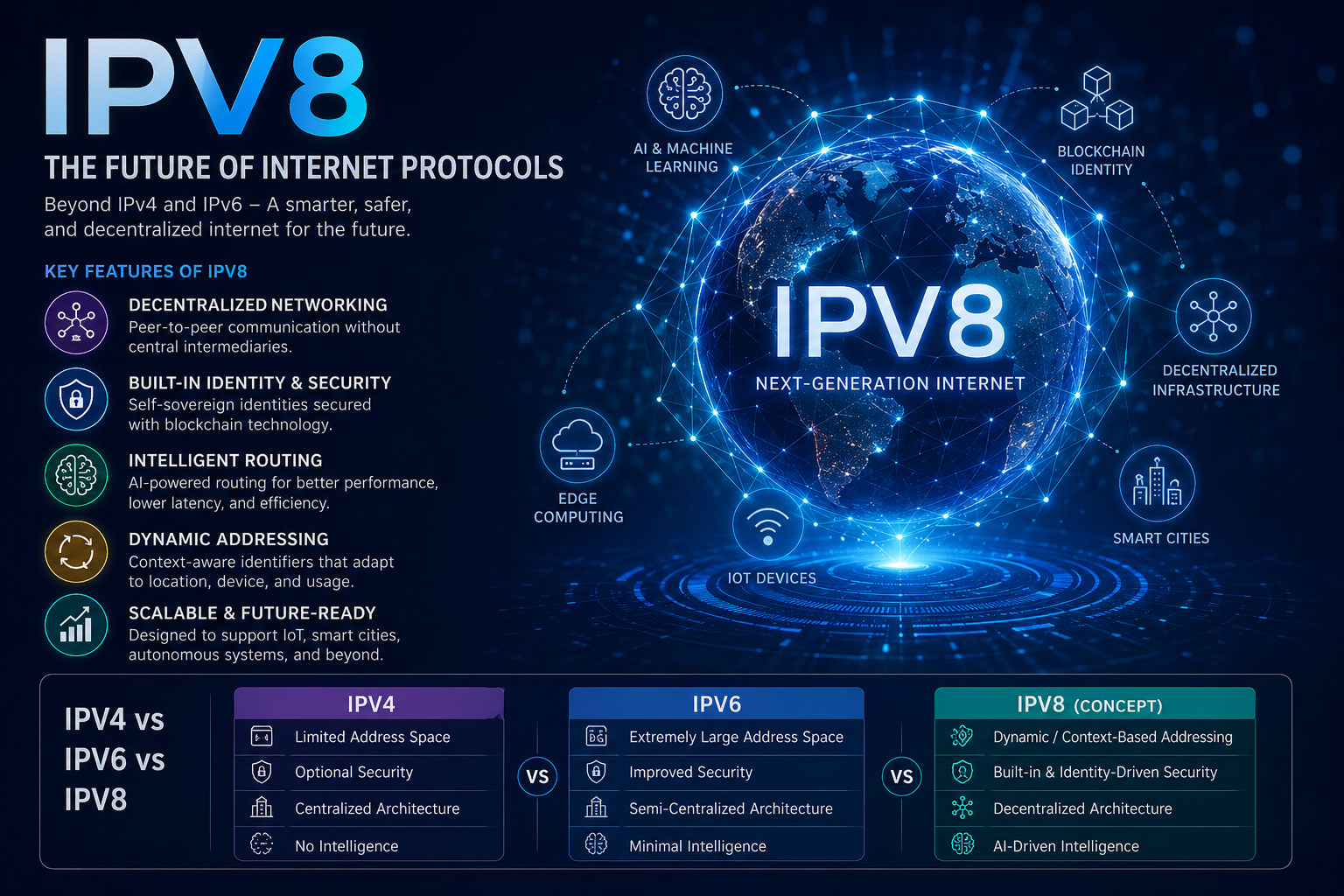
IPv8 is not an officially recognized internet protocol like IPv4 or IPv6. Instead, it is often described as a next-generation networking concept that aims to go beyond the limitations of IP-based systems.
Unlike traditional IP protocols that rely on static addressing, IPv8 is imagined as a more flexible, dynamic, and intelligent networking model, potentially integrating advanced technologies such as:
- Artificial Intelligence (AI)
- Blockchain-based identity systems
- Software-defined networking (SDN)
- Decentralized infrastructure
In simple terms, IPv8 is about rethinking how devices communicate on the internet, not just expanding address space.
Why Do We Need Something Beyond IPv6?
IPv6 was introduced to solve the problem of limited IP addresses in IPv4. While it provides a massive address pool, it still carries some limitations:
1. Complexity in Deployment
Many organizations still struggle to fully transition to IPv6 due to compatibility and infrastructure challenges.
2. Security Concerns
Although IPv6 has built-in security features, real-world implementation often leaves gaps.
3. Centralized Control
The current internet relies heavily on centralized systems (ISPs, DNS providers), which can create vulnerabilities and control issues.
4. Lack of Intelligence
Traditional IP systems are not designed to make decisions—they simply route data.
IPv8 aims to address these challenges by introducing more autonomy, security, and adaptability into networking.
Key Features of IPv8 (Conceptual)
While there is no official specification yet, IPv8 is often associated with the following ideas:
🌐 1. Decentralized Networking
Instead of relying on central servers, IPv8 could use peer-to-peer (P2P) communication, reducing dependency on intermediaries.
🔐 2. Built-in Identity & Security
Devices may have self-sovereign identities, potentially secured using blockchain, making spoofing and hacking more difficult.
⚡ 3. Intelligent Routing
With AI integration, networks could automatically optimize traffic, reduce latency, and improve performance.
🔄 4. Dynamic Addressing
Instead of fixed IP addresses, IPv8 could use context-aware identifiers, adapting based on location, device, or usage.
🌍 5. Scalability for Future Tech
IPv8 is expected to support emerging technologies like:
- IoT (Internet of Things)
- Smart cities
- Autonomous vehicles
- Edge computing
Is IPv8 Real Today?
As of now, IPv8 is not an official internet standard defined by organizations like IETF. However, similar ideas are already being explored in:
- Next-generation internet research projects
- Blockchain-based networking platforms
- Decentralized web (Web3) initiatives
So while IPv8 may not exist as a formal protocol yet, its core ideas are already influencing modern networking innovations.
IPv4 vs IPv6 vs IPv8 (Quick Comparison)
| Feature | IPv4 | IPv6 | IPv8 (Concept) |
|---|---|---|---|
| Address Space | Limited | Extremely large | Dynamic / context-based |
| Security | Optional | Improved | Built-in & identity-driven |
| Architecture | Centralized | Semi-centralized | Decentralized |
| Intelligence | None | Minimal | AI-driven |
| Adoption | Global | Growing | Experimental |
What Does IPv8 Mean for Businesses?
For businesses—especially those in networking, ISPs, and IT services—IPv8 concepts could bring:
- Better network performance and optimization
- Stronger cybersecurity frameworks
- Reduced reliance on centralized infrastructure
- New business models based on decentralized services
If you are in the internet service or telecom industry, staying updated with such emerging technologies can give you a competitive advantage.
Final Thoughts
IPv8 may still be in the conceptual or experimental stage, but it reflects a clear direction: the future internet will be smarter, more secure, and less centralized.
While IPv6 adoption is still ongoing, innovations like IPv8 show that the evolution of the internet never stops. Keeping an eye on these developments today can help you prepare for the next big shift in connectivity.