- Internet
-
2026-01-10 17:40:06
Internet Leased Line vs. Broadband: Which Connectivity Solution is Right for Your Business?
Admin
In today's digital-first world, a reliable internet connection is the backbone of any successful business. But not all internet connections are created equal. When shopping for business internet, you'll likely encounter two main options: Broadband and Internet Leased Line (ILL). While they both connect you to the web, they do so in fundamentally different ways, impacting performance, reliability, and cost.
This post will dive deep into the Internet Leased Line vs. Broadband debate to help you understand which solution aligns best with your operational requirements.
1. The Core Difference: Dedicated vs. Shared
The most significant difference lies in how the connection is delivered to your premises.
-
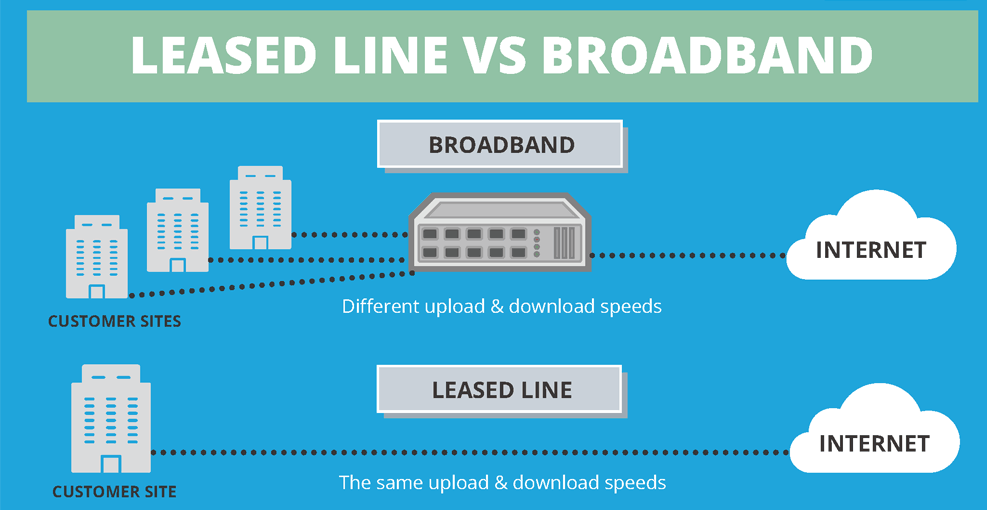
Broadband: Think of broadband as a multi-lane highway that you share with your neighbors. The infrastructure from your Internet Service Provider (ISP) to a local cabinet is shared among many users in your area. During peak usage times (like evenings), traffic congestion occurs, leading to slower speeds and fluctuating performance for everyone on that "highway."
-
Internet Leased Line (ILL): An Internet Leased Line is like having a private, dedicated express tunnel built solely for your business. It connects your premises directly to the ISP's core network. There is no sharing of bandwidth with other businesses or residential users. The connection is exclusively yours, guaranteeing consistent performance 24/7, regardless of what your neighbors are doing.
2. Speed Demons: Symmetrical vs. Asymmetrical
Speed is often the first thing people look at, but it's not just about the number. It's about consistency and direction.
-
Broadband: Broadband connections are typically asymmetrical, meaning download speeds are much faster than upload speeds. ISPs advertise "up to" speeds, which are theoretical maximums you may rarely achieve. This asymmetrical nature is fine for browsing and streaming but can be a bottleneck for businesses that need to upload large files, host servers, or conduct high-quality video conferencing.
-
Internet Leased Line (ILL): Leased lines offer symmetrical speeds. If you pay for a 100 Mbps connection, you get 100 Mbps for both downloading and uploading. Furthermore, this speed is guaranteed, not just an "up to" figure. This is crucial for tasks like cloud data backups, VoIP calls, and seamless file sharing.
3. Reliability & SLAs: When Downtime Isn't an Option
For many businesses, internet downtime translates directly to lost revenue and productivity.
-
Broadband: Broadband services are provided on a "best-effort" basis. While generally reliable, there are no guarantees on uptime or fault resolution times. If your connection goes down, you'll have to wait in line with residential customers for support, and fixing the issue could take hours or even days.
-
Internet Leased Line (ILL): Leased lines come with strict Service Level Agreements (SLAs). These are contracts that guarantee a certain level of performance, typically 99.5% uptime or higher. SLAs also specify guaranteed response and resolution times for any technical issues, often within a few hours. You get priority 24/7 dedicated support from a team of experts.
4. Security & Scalability
-
Security: Because a leased line is a private, dedicated connection, it is inherently more secure than a shared broadband network. Your data doesn't traverse a public "last mile" infrastructure shared with others, reducing the risk of interception.
-
Scalability: As your business grows, your bandwidth needs will increase. Upgrading a broadband connection can sometimes be difficult due to infrastructure limitations in your area. Leased lines are highly scalable; you can often increase your bandwidth capacity with a simple phone call to your provider, without needing new physical lines installed.
5. The Cost Factor
This is often the deciding factor for smaller businesses.
-
Broadband: Broadband is significantly cheaper, making it a budget-friendly option for home offices, small businesses with light internet usage, or those where occasional slowdowns aren't critical.
-
Internet Leased Line (ILL): Due to its dedicated nature, guaranteed speeds, SLAs, and premium support, a leased line is a much higher investment. However, for medium to large enterprises, the cost is often justified by the gains in productivity, reliability, and business continuity.
Conclusion: Which One Should You Choose?
Here’s a quick summary to help you decide:
Choose Broadband if:
-
You are a small business or home office with 1-10 employees.
-
Your primary internet activities are web browsing, email, and basic cloud apps.
-
Occasional internet slowdowns or downtime won't critically impact your operations.
-
Budget is a primary concern.
Choose an Internet Leased Line if:
-
You are a medium to large enterprise with a larger workforce.
-
Your business relies heavily on mission-critical applications, cloud services, VoIP, and video conferencing.
-
You require consistent, guaranteed symmetrical speeds for large data transfers.
-
Internet downtime is unacceptable and would cause significant financial loss.
-
You need enhanced security and priority support with a strong SLA.